Connect this guide with the rest of your visit in the Macao trip planner. Read how the research is made and what its sources establish.
At a glance
Start here
- The World Heritage property is an urban ensemble, not a single ruin.
- Its significance lies in exchange, coexistence and connected street fabric.
- Active worship and civic life are part of the heritage story.
- Official maps and current access notices help visitors read the whole network.
01
One property, many connected components
UNESCO's description identifies a group of principal buildings and public spaces that makes the structure of the old trading port legible. The local Cultural Affairs Bureau route makes that idea practical by connecting 22 historic buildings and eight plazas. The protected story therefore unfolds through streets and relationships, not through a collection of detached façades.
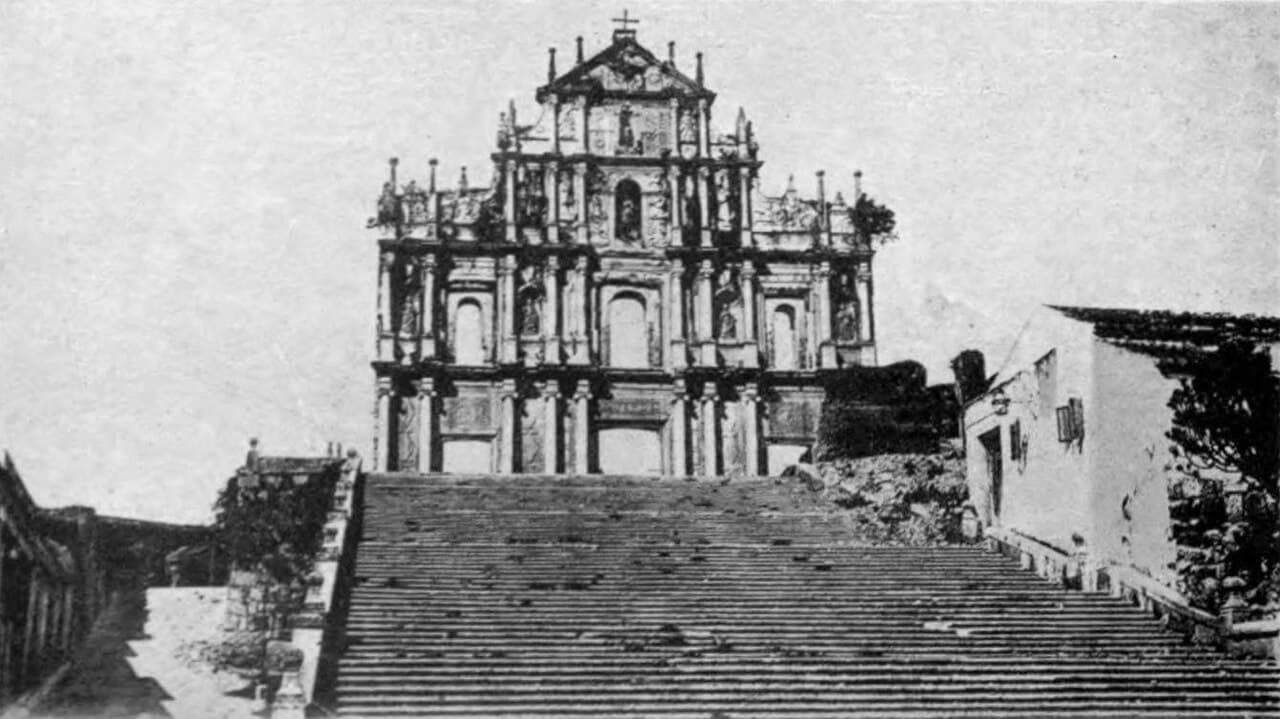
This distinction matters at the Ruins of St. Paul's. The stone front is only the most visible remnant of the Church of Mater Dei and St. Paul's College complex. Nearby Mount Fortress, the surviving city-wall section and Na Tcha Temple expand the scene into education, defence, construction and living Chinese religious tradition. Each component changes the meaning of the others.
- Use the official heritage inventory to see the full component list.
- Look at the connecting street before entering the next building.
- Ask what each nearby site adds to the same urban story.
02
Why UNESCO inscribed the historic centre
The Historic Centre was inscribed in 2005 under four cultural criteria. UNESCO emphasizes the interchange of values, Macao's testimony to a long encounter between China and the West, its architectural ensemble, and its association with cultural, spiritual, scientific and technical exchange. The case is much broader than visual charm or the survival of European-looking buildings.
Trade made the encounter possible, but the resulting influence moved through architecture, religion, education, medicine, language, charity and cuisine. UNESCO's statement says the core value is not architecture, people or customs alone, but their mixture. Visitors can therefore read an active temple, a library, a civic square and a former college as parts of one historic system.
- Exchange is the central idea, not architectural novelty alone.
- The criteria cover institutions and ideas as well as buildings.
- Living uses matter alongside conserved fabric.
03
St Paul's is a cluster, not a photo stop
The official Macao World Heritage page explains that the Ruins include the façade of the former Church of Mater Dei and remains of St. Paul's College, both lost in an 1835 fire. The college, church and Mount Fortress formed a Jesuit complex sometimes described as the city's acropolis. That institutional landscape once joined worship, education and defence above the port city.
The façade itself contains biblical, classical, Chinese and maritime motifs, including Chinese characters and a Portuguese ship. Read it slowly from bottom to top, then turn to the archaeological remains and the fortress topography. A front-on photograph records the surface; the surrounding cluster reveals why this place belonged to a larger programme of learning, mission and exchange.
- Read the official component description before examining motifs.
- Continue beyond the staircase where current access permits.
- Relate the ruin to the college site and Mount Fortress.
04
Na Tcha Temple changes the famous scene
Na Tcha Temple stands close to the Ruins of St. Paul's and the old wall. The Cultural Affairs Bureau identifies that proximity as a strong expression of Macao's multicultural identity: a compact traditional Chinese temple remains beside the remnants of a major Jesuit enterprise. Their difference in scale makes the relationship more, not less, revealing.
The right response is not to collapse the two traditions into a vague fusion. Observe the distinct building forms, histories and present functions, then ask how they have shared the same urban ground. Na Tcha Temple remains a religious place, so worship and posted instructions take priority over interpretation or photography. Heritage recognition does not turn it into a stage set.
- Notice proximity without pretending the traditions are identical.
- Treat the temple as an active religious place.
- Include the old wall when reading this compact cluster.
05
Public squares carry the civic story
The eight plazas in the current heritage route show why open space belongs to the inscription. Senado Square has functioned as an urban centre for centuries and remains a venue for public events. Its surrounding civic, commercial and religious buildings create a shared setting where heritage is experienced through movement and use, not only through controlled interiors.
A square reveals how the old city connects. Follow the direction of adjoining streets, notice which institutions face the open space, and watch how everyday circulation continues around visitors. This is different from treating the wave paving as a decorative background. The paving, façades and routes work together as urban fabric, one of the qualities UNESCO highlights in the property.
- Look outward from the centre of the square.
- Identify civic, religious and commercial edges.
- Keep normal public circulation clear.
06
Southern sites widen the story
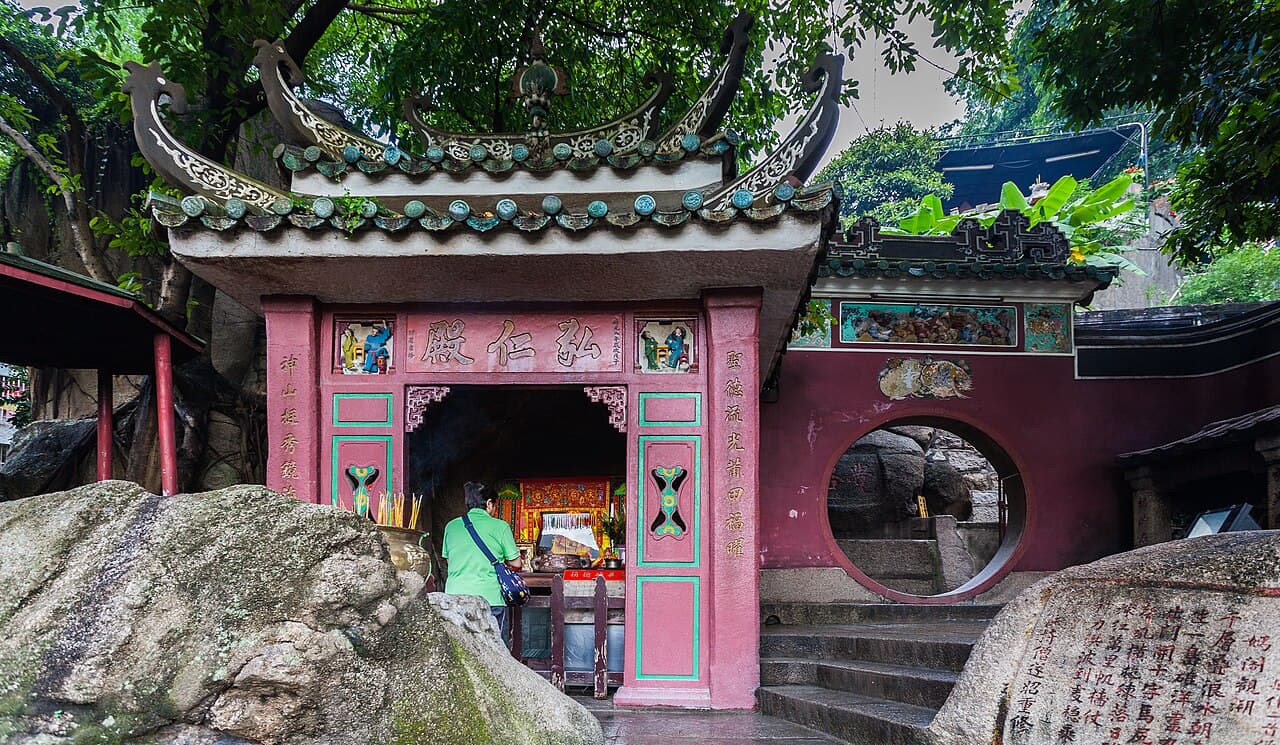
At the southern end, A-Ma Temple predates the Portuguese settlement and binds the heritage narrative to seafaring belief and the natural slope of Barra Hill. Farther along the historic route, Mandarin's House combines a large Chinese residential compound with selected Western and regional decorative influences. Together they prevent the central church façades from defining Macao alone.
These places also shift scale. A-Ma Temple is a sequence of pavilions adapted to rock and slope; Mandarin's House organizes courtyards, service areas and family rooms along a long compound. Their architecture emerges from distinct social and religious functions. Compare materials, thresholds and movement instead of looking for a single blended style everywhere.
- Read A-Ma Temple as a sacred complex shaped by terrain.
- Read Mandarin's House through courtyards and household hierarchy.
- Compare functions before comparing decorative details.
07
Heritage remains part of a changing city
UNESCO notes that land reclamation altered the coastline while important visual links between the historic centre and water remain. It also identifies development pressure and the need to protect sightlines and the wider setting. The property's integrity is therefore an ongoing urban question, not a finished celebration from the moment of inscription in 2005.
Visitors can read that tension without making unsupported judgments about individual projects. From Mount Fortress or Guia, look at the relationship among old hills, water and newer construction. At street level, notice continued worship, public events and library or museum use. Use the Cultural Affairs Bureau's current route and site pages to check access, then give the ensemble enough time to remain connected in your understanding.
- Observe water views as part of the port-city setting.
- Notice which heritage buildings retain active functions.
- Use current official access information for individual components.
Useful answers
Reader questions
Is the Ruins of St. Paul's the whole UNESCO site?
No. It is one component within the Historic Centre of Macao, a connected ensemble of historic buildings, streets and public squares. The current Cultural Affairs Bureau route links 22 buildings and eight plazas.
Sources: Cultural Affairs Bureau; Cultural Affairs Bureau; UNESCO World Heritage CentreWhy is the Historic Centre of Macao significant?
UNESCO recognizes its testimony to long exchange between Chinese and Western cultures through trade, architecture, religion, education, science and civic life. Its value lies in the connected mixture, not in one architectural style.
Sources: UNESCO World Heritage CentreWhy are Na Tcha Temple and St Paul's discussed together?
They stand close together with the old city wall, placing a traditional Chinese temple beside the remains of a major Jesuit complex. The official heritage interpretation identifies that relationship as central to Macao's multicultural urban identity.
Sources: Cultural Affairs Bureau; Cultural Affairs Bureau; Cultural Affairs BureauHow should I explore the full heritage network?
Use the Cultural Affairs Bureau's current Historic Centre route and component pages, then select connected clusters rather than rushing all sites. Confirm access for each interior and respect buildings that remain active religious or civic places.
Sources: Cultural Affairs Bureau; Cultural Affairs BureauRead the evidence
Sources and further reading
These sources support the relevant sections above. Plans and comparisons are editorial suggestions. Check operators for current arrangements.
- Historic Centre of Macao ↗UNESCO World Heritage Centre · Research date 14 September 2026
Inscription criteria, Outstanding Universal Value, integrity, authenticity and the connected port-city ensemble.
- Historic Buildings ↗Cultural Affairs Bureau · Research date 14 September 2026
Official local inventory of the Historic Centre's buildings and public squares and the 2005 inscription context.
- Cultural Affairs Bureau Launches the Historic Centre of Macao Route ↗Cultural Affairs Bureau · Research date 14 September 2026
The current official route connecting 22 historic buildings and eight plazas with maps and interpretation.
- Ruins of St. Paul's College ↗Cultural Affairs Bureau · Research date 14 September 2026
The former church and college complex, the 1835 fire, façade motifs and relationship to Mount Fortress.
- Mount Fortress ↗Cultural Affairs Bureau · Research date 14 September 2026
The fortress's defensive and Jesuit context and present relationship to the Macao Museum.
- Na Tcha Temple Next to the Ruins of St. Paul's College ↗Cultural Affairs Bureau · Research date 14 September 2026
The temple's history, form and interpretive relationship to St. Paul's and Macao's multicultural identity.
- Old City Walls ↗Cultural Affairs Bureau · Research date 14 September 2026
The surviving defensive wall's materials and physical relationship to St. Paul's, Na Tcha Temple and Mount Fortress.
- Senado Square ↗Cultural Affairs Bureau · Research date 14 September 2026
Senado Square's long civic role, active public use and surrounding urban character.
- A-Ma Temple ↗Cultural Affairs Bureau · Research date 14 September 2026
The temple's pre-settlement history, pavilions, religious traditions and adaptation to Barra Hill.
- Mandarin's House ↗Cultural Affairs Bureau · Research date 14 September 2026
The Chinese residential compound's scale, courtyard organization and selected Western and regional influences.