Connect this guide with the rest of your visit in the Macao trip planner. Read how the research is made and what its sources establish.
At a glance
Start here
- The five residences were built in 1921 and were associated with senior civil servants and Macanese families.
- Their present functions combine interpretation, exhibitions, cultural activity and official reception use.
- The surrounding village, temples, church and former waterfront supply essential context that the houses alone cannot provide.
- Current opening arrangements and exhibition access should be confirmed on official pages before a visit.
01
Five houses offer one carefully bounded lens
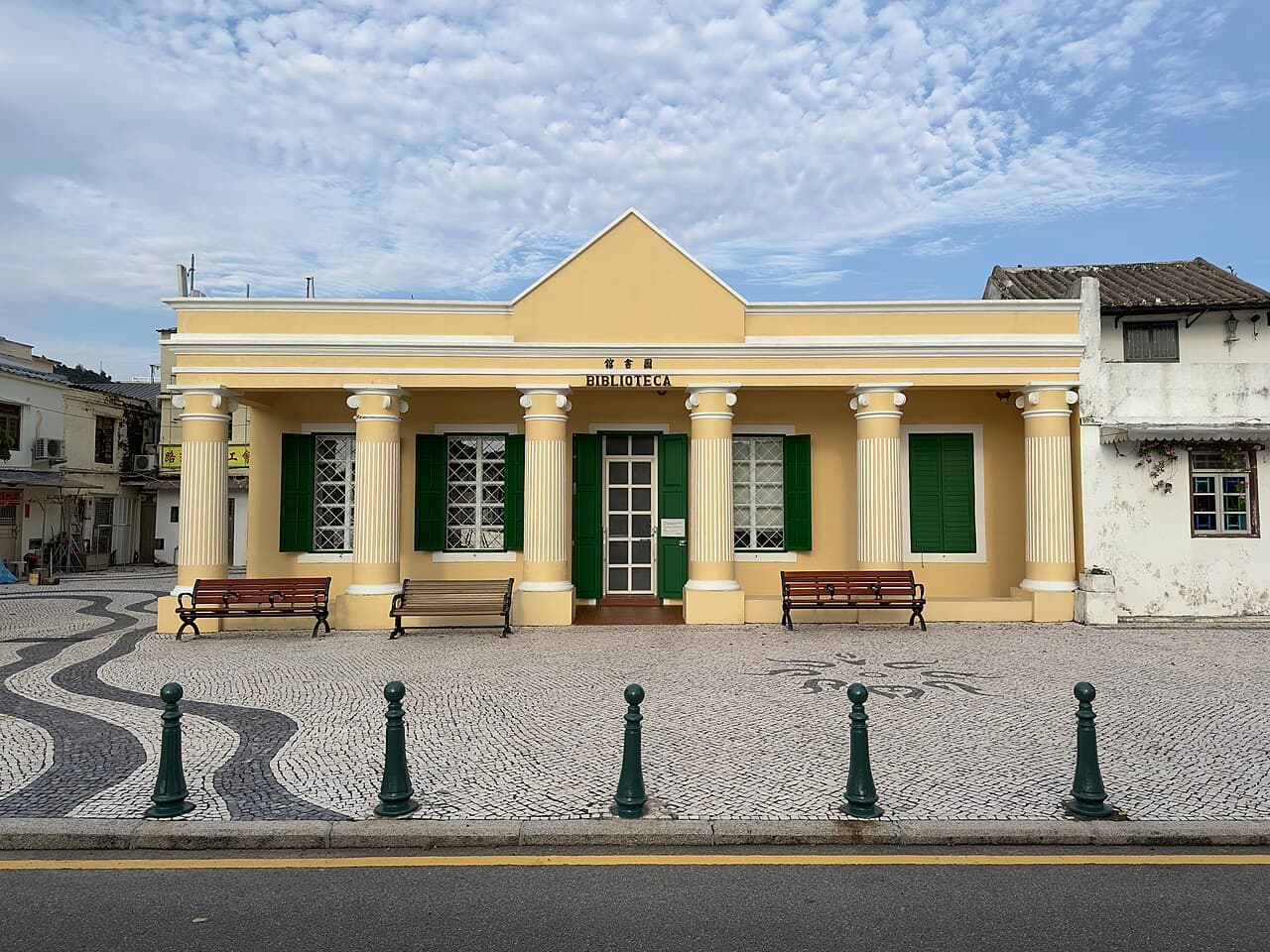
The official Taipa Houses history identifies the group as five residences built in 1921. It says they were originally homes of senior civil servants and Macanese families. That origin makes the ensemble valuable evidence of a specific domestic and administrative world, but it also defines the limits of what the buildings can claim to represent.
A productive reading begins with that boundary. The rooms, proportions and setting can illuminate the lives selected for interpretation without being treated as a complete portrait of Taipa society. Fishing communities, temple networks, village commerce and other forms of work appear more clearly when the houses are connected to nearby sites and to the island history museum.
- Use the construction date and original residents as anchors, not as a claim that the site represents every Taipa household.
- Pair domestic interpretation with village and working-waterfront history.
- Notice both the individual houses and their relationship to the wider setting.
02
Domestic culture sits at the centre of the ensemble
One of the buildings is presented as the Macanese Living Museum. The official description connects its displays to Macanese life, religion, festivals and food traditions, reflecting a community shaped over centuries by Portuguese settlement and exchange with Chinese and other Asian cultures. This is why the site rewards more than a quick exterior photograph.
Domestic displays make large historical processes legible at household scale. Furniture, spatial arrangement and interpretive material can show how identity was expressed in daily life rather than only through monuments. They also help distinguish Macanese culture from a vague idea of either Portuguese or Chinese influence: the point is a locally formed community and its own practices.
- Treat the Macanese story as locally formed rather than as a simple two-part blend.
- Look for everyday evidence such as room use and domestic objects.
- Confirm the current interpretive displays instead of relying on an old itinerary.
03
The site became a museum and then a cultural venue
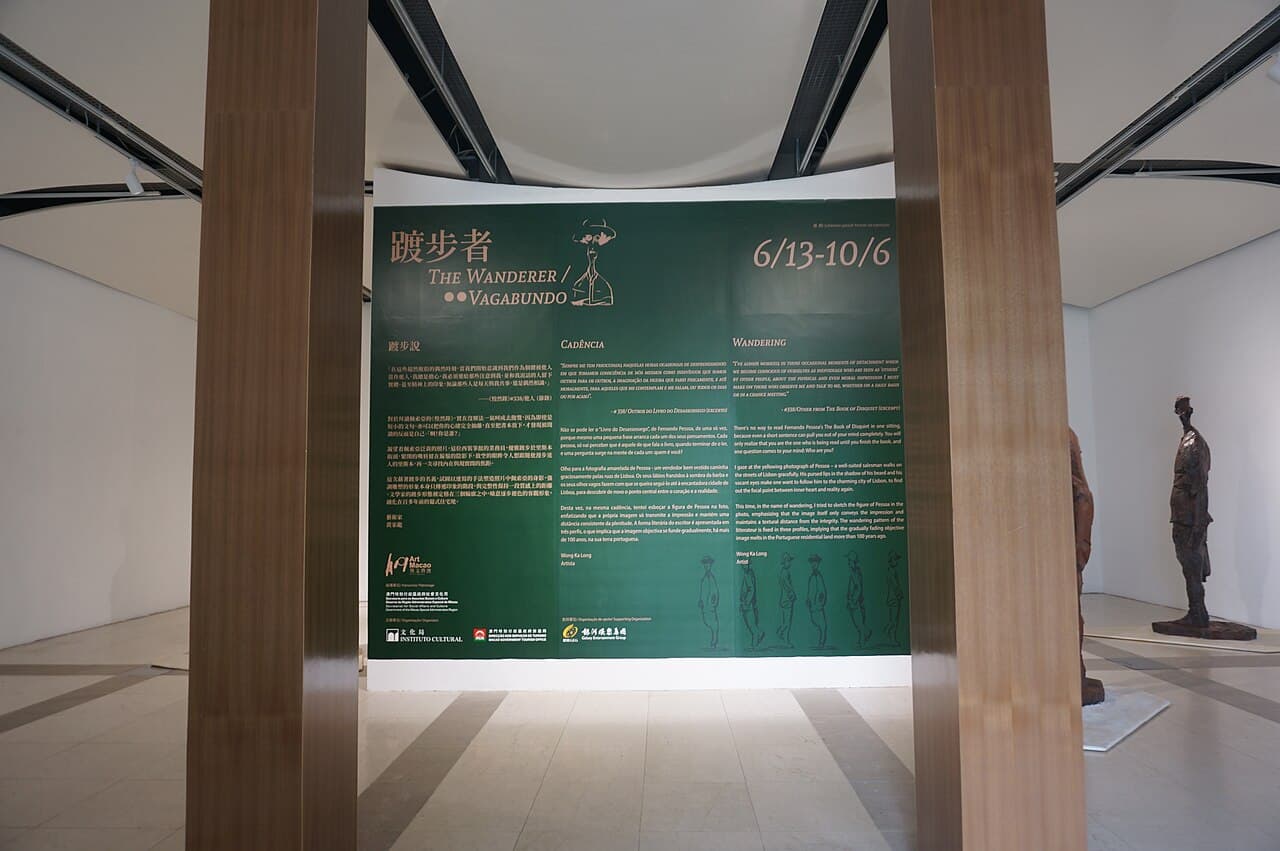
The buildings were recognised for architectural value in 1992 and opened as a museum complex in 1999. The official history records another important shift in 2016, when the five houses were assigned distinct functions: the Macanese Living Museum, Exhibitions Gallery, Creative Casa, Nostalgic House and House for Receptions.
Those layers matter because Taipa Houses are not a time capsule left unchanged since 1921. They are historic residences adapted for public cultural use. A room used for an exhibition therefore belongs to the site's contemporary role, while a reception function may not offer the same public access as a museum gallery.
- 1921 marks construction, 1999 marks the museum opening and 2016 marks the current five-part concept.
- Separate original residential history from later museum and cultural uses.
- Check which functions are open to visitors when planning.
04
Church, garden and shoreline complete the composition
The tourism office's Taipa route links the houses with Our Lady of Carmel Church and the surrounding village landscape. That connection is historically useful. The church adds an institutional and religious dimension, while the garden and former waterfront explain why the residences feel separate from the denser lanes of the village.
The water is important even where the present landscape no longer reads as an active shore. Taipa's coastline and transport connections changed substantially as Macao developed. Reading the houses against that transformed edge prevents their garden setting from seeming detached from island geography.
- Use the official Taipa route as a relationship map rather than a rigid schedule.
- Read the open setting as part of a changed coastal landscape.
- Include the church and village core to avoid isolating the houses from their context.
05
Village temples reveal a different island history
Pak Tai Temple supplies a necessary counterpoint to the houses and church. The official tourism account connects the temple to Taipa's fishing community and to worship of Pak Tai. That relationship brings seafaring belief and community organisation into an area often presented mainly through Portuguese-style architecture and food streets.
Religious sites, residences and public buildings occupied the same island landscape and served communities whose activities overlapped. Temple observances and access can vary, so use the official description for historical context and current notices if a particular activity matters.
- Add Pak Tai Temple to place fishing-community history beside domestic history.
- Distinguish stable historical context from changeable festival arrangements.
- Read religious buildings as active community places as well as heritage.
06
The Old Taipa Pier records changing connections
The Old Taipa Pier makes island change concrete. The Cultural Affairs Bureau records that a reinforced-concrete pier was inaugurated in 1950 and served ferry connections. It also explains how the Taipa-Coloane causeway and the first Macao-Taipa bridge altered transport patterns, followed by the discontinuation of regular pier services in the early 1980s.
Placed beside the 1921 houses, that chronology spans a major transition from water links toward fixed road connections. The pier helps explain why the houses' original setting cannot be understood solely through today's roads and reclaimed land.
- Connect the pier's ferry role to the later rise of road links.
- Use the houses and pier as evidence from different parts of Taipa's twentieth-century transition.
- Avoid assuming the present shoreline reproduces the historic one.
07
Build a visit around layers, not a checklist
A coherent Taipa history visit can be built from three evidence types. Start with the houses for domestic and institutional history, add the Museum of Taipa and Coloane History for a broader island account, and use the village, temple and pier to reconnect that account to belief, work and movement. This structure is more useful than trying to see every nearby attraction.
Before setting out, open the official pages for the Taipa Houses and island history museum. Check current opening information, exhibition status and any access notices there. Then use the tourism office route to understand the geographic relationship among sites, without treating its sequence as mandatory or its older descriptive details as a live operating notice.
The main interpretive question is simple: what does each place add that the others do not? The houses contribute a specific Macanese residential lens; the museum broadens the chronology; the temple and church reveal religious geography; and the pier makes transport transformation visible. Together, they tell a more complete island story.
- Check official venue pages on the planning date for current access.
- Choose one domestic, one community and one transport-history anchor.
- Let the sites answer different questions instead of repeating the same photograph.
Useful answers
Reader questions
What were the Taipa Houses originally used for?
The official site says the five houses were built in 1921 and served as residences for senior civil servants and Macanese families. That makes them evidence of a particular residential and administrative setting, not a complete model of how every Taipa resident lived.
Sources: Cultural Affairs BureauAre all five Taipa Houses the same kind of museum?
No. The concept introduced in 2016 assigns different roles to the Macanese Living Museum, Exhibitions Gallery, Creative Casa, Nostalgic House and House for Receptions. Consult the official venue page for current public access and exhibition information rather than assuming every building operates identically.
Sources: Cultural Affairs BureauWhat other sites give the houses historical context?
The Museum of Taipa and Coloane History broadens the island narrative, while Our Lady of Carmel Church, Pak Tai Temple, the village and Old Taipa Pier add religious, community and transport history. The tourism office's Taipa route helps show how several of these places relate geographically.
Sources: Cultural Affairs Bureau; Macao Government Tourism Office; Macao Government Tourism Office; Cultural Affairs BureauWhy does the Old Taipa Pier matter to this story?
It records an earlier transport system based on ferry connections and helps explain the shift toward road links. Its official heritage account also gives useful context for understanding how Taipa's coastline, accessibility and urban relationship with the peninsula changed during the twentieth century.
Sources: Cultural Affairs BureauRead the evidence
Sources and further reading
These sources support the relevant sections above. Plans and comparisons are editorial suggestions. Check operators for current arrangements.
- Taipa Houses ↗Cultural Affairs Bureau · Research date 14 September 2026
Construction and museum history, original residents, Macanese interpretation and the five current cultural functions.
- Museum of Taipa and Coloane History ↗Cultural Affairs Bureau · Research date 14 September 2026
The museum's building history and its role in interpreting Taipa and Coloane archaeology, villages, religion and development.
- Portuguese Ambiance Tour at Taipa Island ↗Macao Government Tourism Office · Research date 14 September 2026
The official visitor route connecting Taipa Houses, Our Lady of Carmel Church and the village setting.
- Pak Tai Temple in Taipa ↗Macao Government Tourism Office · Research date 14 September 2026
The temple's historical relationship with Taipa's fishing community and local worship.
- Old Taipa Pier ↗Cultural Affairs Bureau · Research date 14 September 2026
The pier's construction, ferry function and decline as causeway and bridge links changed island transport.