Connect this guide with the rest of your visit in the Macao trip planner. Read how the research is made and what its sources establish.
At a glance
Start here
- Treat Macanese and Portuguese cuisines as related but distinct choices.
- Plan one full meal and a few deliberate snacks in the same district.
- Use official restaurant directories as discovery tools, not universal rankings.
- Confirm prices, ingredients, reservations and operating status directly.
01
Build a three-part food map
Divide the plan into Macanese or Portuguese cooking, Cantonese cooking, and local snacks. The tourism office separates these categories for a reason: they represent different culinary lineages, meal formats and expectations. Choosing one from each category produces a more useful introduction than buying several versions of one pastry or ordering a table of unfamiliar dishes without a clear question.
Tie each choice to geography. Central peninsula streets, Taipa Village and Coloane all have dining options, but the current restaurant directory should determine the actual shortlist. Start with the neighbourhoods already on your itinerary, filter by cuisine, and save two possible establishments for the main meal. The second option matters when a menu, queue or operating status has changed.
- Choose one substantial meal as the day's anchor.
- Add two or three small tastes, not a second full itinerary.
- Keep a nearby alternative in the same cuisine category.
02
Separate Macanese from Portuguese cuisine
Macanese cuisine is not simply Portuguese food served in Macao. The tourism office describes it as a combination of Portuguese and Chinese cuisines using ingredients and seasonings connected to Europe, South America, Africa and Southeast Asia. Portuguese cuisine is also widely available, but it follows its own traditions. Decide which story you want the main meal to tell.
For a Macanese meal, use the official dish guide to recognize possibilities such as minchi, African chicken, curries, bacalhau preparations and serradura, while accepting that recipes differ by establishment. For Portuguese food, look for the restaurant's own description of its cooking. Never assume that a Portuguese name, decorative tiles or a resort location proves the menu's culinary identity.
- Read the restaurant's own menu before booking.
- Ask which dishes the kitchen identifies as Macanese.
- Order for contrast rather than collecting famous names.
03
Make room for Cantonese food
Cantonese cooking is central to Macao's everyday food landscape. The tourism office's Chinese dining guide identifies Cantonese cuisine as the most commonly found Chinese regional style in the territory and describes dim sum as one part of a much broader table. A first visit should therefore leave room for noodles, congee, roast meats, seafood or shared dishes as well as dumplings.
Choose the meal format before the venue. A short morning meal, a shared lunch and a formal dinner involve different menus and group decisions. Check serving periods directly because a restaurant may not offer every item all day. If the group is small, order fewer dishes and ask about portion size rather than creating waste to satisfy a checklist.
- Decide whether the goal is dim sum, noodles or shared dishes.
- Check the relevant menu period with the restaurant.
- Ask about portion size before ordering for a small group.
04
Choose local snacks by contrast
The official local-food guide ranges from savoury noodles, congee and pork chop buns to almond cookies and egg puffs. Use that range to choose contrasting tastes and textures. A savoury snack, a baked item and a take-home product tell a broader story than three sweets eaten because they appear on every souvenir counter.
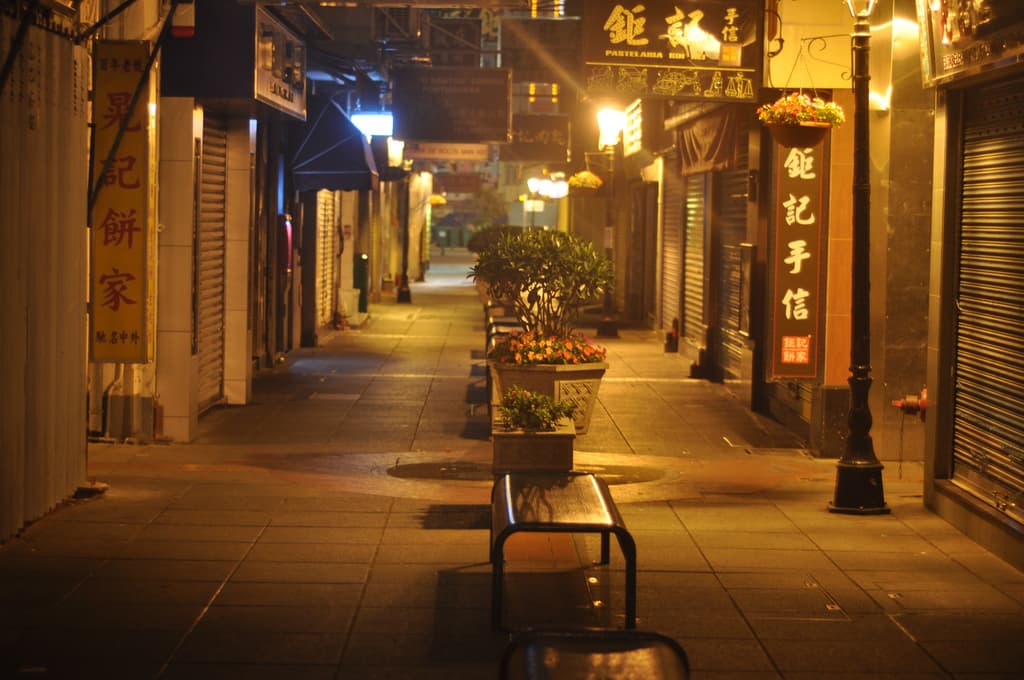
Rua do Cunha is a convenient Taipa food street, but convenience should not become an automatic queue. Look at the current menu and price before joining, and compare another business nearby through the official dining or Distinctive Shops directories. Eat small items when they fit naturally between Taipa Houses, the island-history museum and other planned stops.
- Pair one savoury item with one sweet item.
- Read the visible price and product description first.
- Treat packaged souvenirs as a separate purchase decision.
05
Use official lists as filters, not absolute rankings
The tourism office dining page provides restaurant categories and identifies merchants in its Quality Tourism Services scheme. The Economic and Technological Development Bureau's Distinctive Shops Programme has its own eligibility ideas, including cultural characteristics, craft heritage, innovation and social recognition. These programmes can narrow a large field, but neither label guarantees that a restaurant matches your taste, budget or dietary needs.
Create a shortlist from the official lists, then inspect the establishment's current menu and contact channel. Compare location, cuisine, meal format and whether the group can order sensibly. A modest shop that answers the day's food question may be more useful than a highly promoted venue that demands a separate transfer or an unsuitable set menu.
- Filter first by district and cuisine.
- Check the business's own current menu next.
- Choose for fit rather than for a badge alone.
06
Confirm dietary details without assumptions
Dish names do not reveal every ingredient or preparation method. Minchi, curries, pastries, broths and dim sum can vary between kitchens, so visitors with allergies, religious requirements or other restrictions should ask the establishment about the exact dish and preparation. A directory category or a travel article cannot replace that direct conversation.
Write the essential question in a form you can show staff and keep the answer specific to the selected dish. Ask about substitutions only after confirming what is normally used. If communication remains uncertain, choose a simpler dish or another establishment that can provide a clear answer. This is a planning method, not a claim that any venue can meet every requirement.
- Ask about the selected dish, not the cuisine in general.
- Do not infer ingredients from an English menu name.
- Keep an alternative venue that can answer clearly.
07
Assemble a focused Macao food day
For a heritage day on the peninsula, place a Macanese or Cantonese meal near the walking route and use one local snack as a pause. For Taipa, combine the island museum or Taipa Houses with Rua do Cunha, then choose a proper meal beyond the busiest snack window. Coloane suits a slower meal only when the village is already part of the day's plan.
Confirm the main meal before leaving, but keep snacks flexible. Recheck the establishment's current page or contact channel for operating status, reservations, menu and prices. If a famous item is unavailable, preserve the category rather than chasing another district. The successful plan is one that explains Macao through a few well-chosen tastes and still leaves attention for the streets around them.
- Anchor the meal to an existing sightseeing district.
- Confirm the main venue and keep snacks optional.
- Replace an unavailable item with the same category nearby.
Useful answers
Reader questions
What is the difference between Macanese and Portuguese food?
The tourism office describes Macanese cuisine as a blend shaped by Portuguese and Chinese cooking plus ingredients and seasonings connected to several trading regions. Portuguese cuisine is also common in Macao but remains a distinct culinary tradition.
Sources: Macao Government Tourism Office; UNESCOIs Rua do Cunha the only place to try Macao food?
No. It is a convenient snack and restaurant street in Taipa, while official dining directories list businesses across the peninsula, Taipa, Cotai and Coloane. Choose a district already in your plan and compare current menus there.
Sources: Macao Government Tourism Office; Economic and Technological Development BureauWhich local foods should a first-time visitor choose?
Choose by contrast: one Macanese main dish, one Cantonese meal or noodle dish, and one or two local snacks. The official food pages provide examples, but the restaurant's current menu should determine what is actually available.
Sources: Macao Government Tourism Office; Macao Government Tourism Office; Macao Government Tourism OfficeHow should I handle allergies or dietary restrictions?
Ask the establishment directly about the exact dish, ingredients and preparation. Recipes vary, and neither a dish name nor a directory category guarantees that a particular requirement is met.
Sources: Macao Government Tourism Office; Macao Government Tourism Office; Macao Government Tourism OfficeRead the evidence
Sources and further reading
These sources support the relevant sections above. Plans and comparisons are editorial suggestions. Check operators for current arrangements.
- Dining Out ↗Macao Government Tourism Office · Research date 14 September 2026
Official cuisine categories, restaurant discovery tools and the Quality Tourism Services framework.
- Macanese and Portuguese Dishes ↗Macao Government Tourism Office · Research date 14 September 2026
Official distinction between Macanese and Portuguese cuisines and representative dish categories.
- Chinese Dim Sum and Dishes ↗Macao Government Tourism Office · Research date 14 September 2026
Cantonese cuisine's place in Macao and the range of Chinese meal styles and dishes.
- Local Food ↗Macao Government Tourism Office · Research date 14 September 2026
Official examples of Macao savoury snacks, noodles, breads, biscuits and other local foods.
- Distinctive Shops Programme ↗Economic and Technological Development Bureau · Research date 14 September 2026
Purpose and selection ideas behind the official Distinctive Shops discovery programme.
- International Cities of Gastronomy Fest, Macao ↗UNESCO · Research date 14 September 2026
Macao's Creative City of Gastronomy status since 2017 and food's role in cultural exchange.