Connect this guide with the rest of your visit in the Macao trip planner. Read how the research is made and what its sources establish.
At a glance
Start here
- Coloane's village pier and temples preserve evidence of a community oriented toward the water.
- Lai Chi Vun became a centre for constructing and repairing wooden fishing vessels during the twentieth century.
- Official preservation work treats the shipyards as both built heritage and a record of craft and community life.
- Hac Sa archaeological sites extend the island story far beyond the modern village and shipbuilding era.
01
Look beyond the idea of Coloane as a retreat
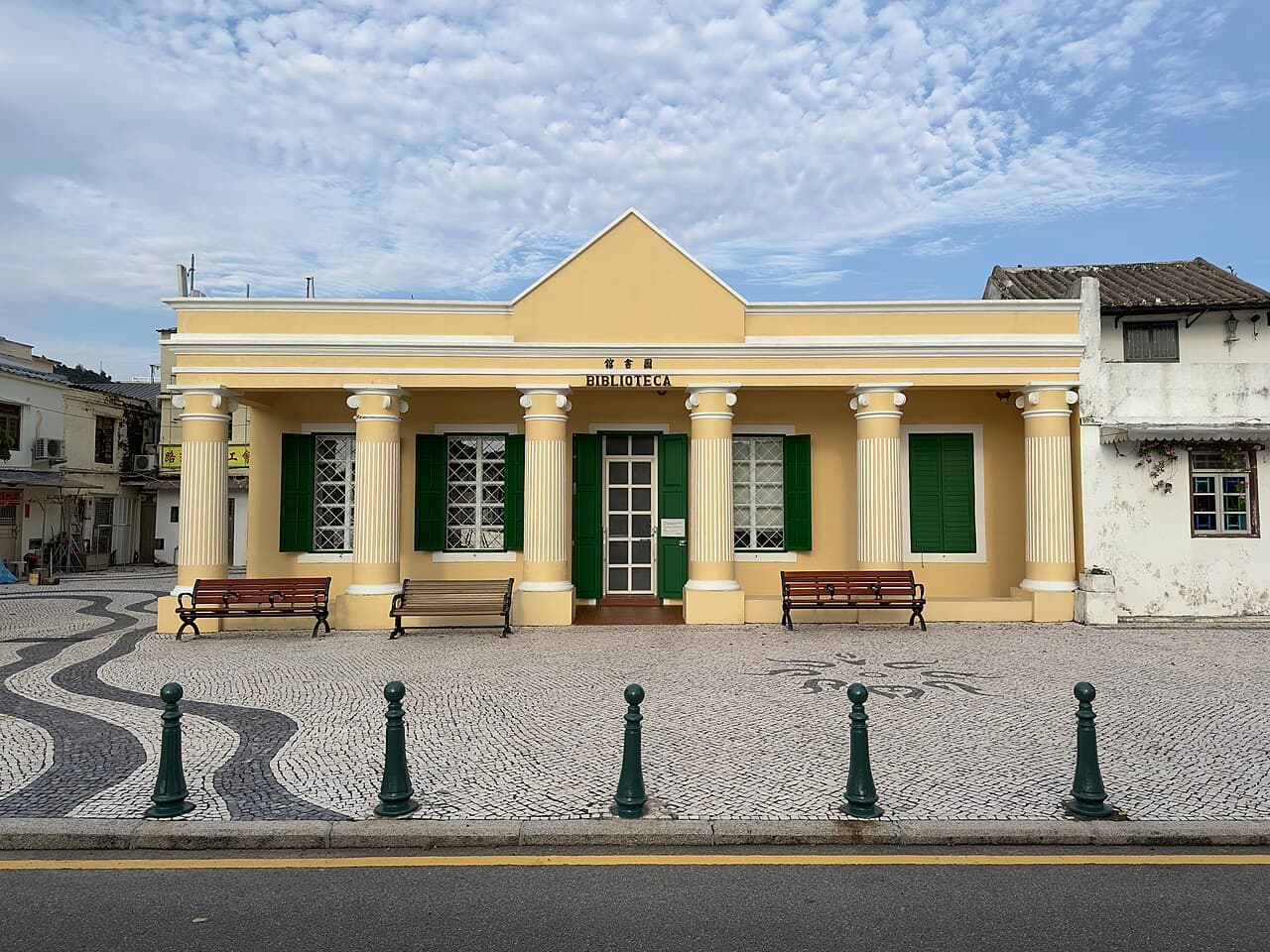
The official Coloane walking route presents a compact landscape of temples, church architecture, a pier, village streets and the Lai Chi Vun area. Read historically, that sequence does more than offer a change of pace from urban Macao. It identifies the institutions and infrastructure of a coastal community.
A working-waterfront narrative asks what residents made, moved, repaired and believed. It brings the pier, Tam Kung Temple and shipyards into the same frame, while leaving room for the village's religious and civic diversity. A shipyard shed is evidence of production, while a pier records transport and exchange.
- Identify work, movement and belief as three separate parts of the village story.
- Use the official route to locate evidence without reducing it to scenery.
- Keep present-day atmosphere distinct from documented historical function.
02
Pier, temples and shore describe a maritime village
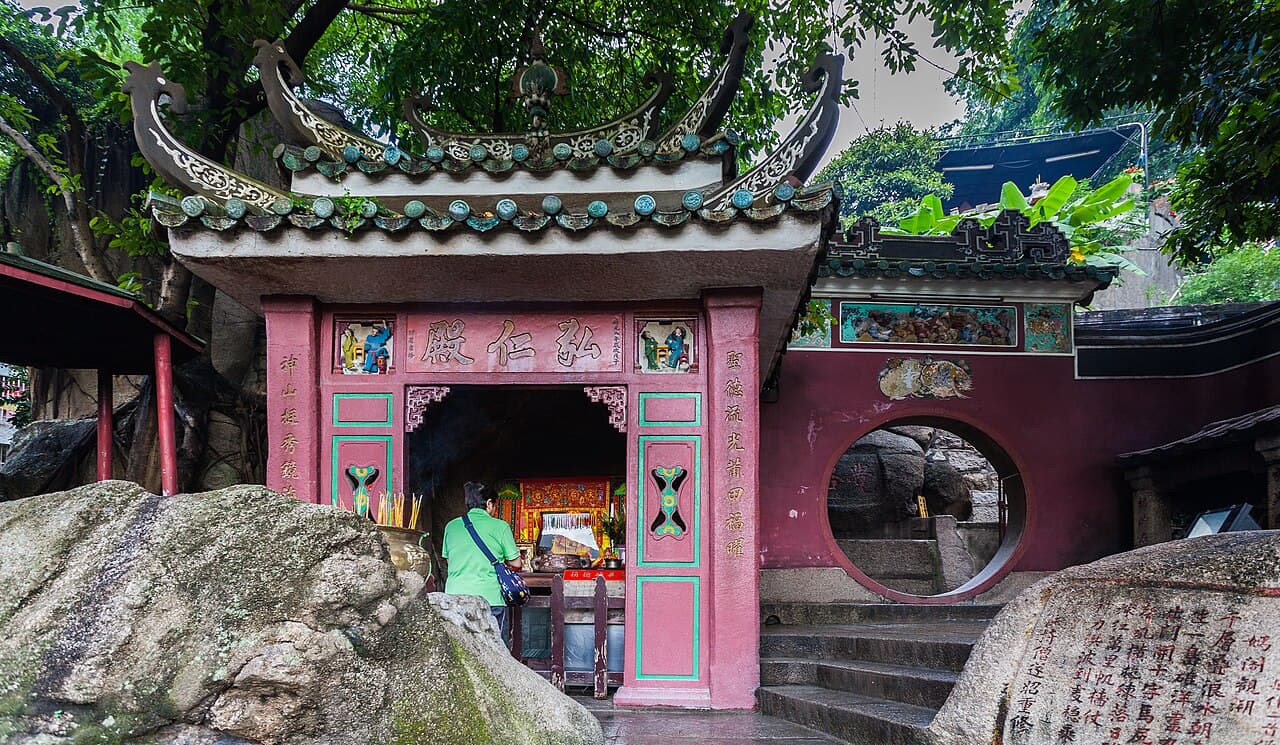
Coloane Village developed at a shoreline where water transport was fundamental. The tourism office's route highlights the pier and nearby temples, including Tam Kung Temple, whose official description connects the deity with seafarers and maritime communities. These sites make the village's orientation toward the water visible even when no boatbuilding activity is taking place.
The pier is infrastructure rather than simply a viewpoint. The official route records its nineteenth-century rebuilding and places it within a network of village landmarks. Religious buildings add different evidence: the sea was an economic space and a source of identity and ritual meaning. Current events require current official notices.
- Read the pier for movement and exchange, not only for its view.
- Use temple history to understand the sea's social and religious significance.
- Verify current events through official notices instead of treating historic customs as a schedule.
03
Lai Chi Vun was a place of skilled production
The Cultural Affairs Bureau describes Lai Chi Vun's shipyards as a twentieth-century industrial landscape where wooden vessels were constructed and repaired. The shipyards grew in connection with the fishing industry, and their surviving structures record the spatial needs of building large craft beside the water.
The work formed a system: materials reached the yards, craftspeople applied specialised knowledge, hulls needed shoreline access and fishing created demand. The official account also connects the yards with community memory, so their value exceeds the appearance of individual structures.
- Think of each yard as part of a production network rather than an isolated shed.
- Connect boat construction and repair to the fishing economy that generated demand.
- Treat community and craft knowledge as part of the site's heritage value.
04
The coastal layout explains how the yards worked
Lai Chi Vun's location is not incidental. Wooden vessels under construction needed a practical relationship with the water, and the line of yards along the coast formed a distinctive working landscape. Buildings, slipways or traces of access only make full sense when interpreted together with the shore.
Repeated structures, their orientation and proximity to the water preserve the logic of the work after the industry declines. Use official maps and interpretation where surviving fabric is incomplete, and check which zones or displays are currently available instead of guessing from photographs.
- Read shore, yard structures and vessel access as one industrial landscape.
- Use official labels to identify functions that are no longer visually obvious.
- Check current access information because conservation and activation work can alter the visitor route.
05
Preservation gives the shipyards a new public role
The Cultural Affairs Bureau has documented planning, conservation and phased activation at the Lai Chi Vun site. Its account presents the shipyards as an industrial heritage asset and describes the use of exhibitions and cultural activity to communicate shipbuilding history. This is a contemporary layer, not a continuation of the original production economy.
Adaptive use can make craft history understandable, but different areas may be at different stages and public arrangements can evolve. Avoid fixed access assumptions from an undated guide; check the latest Cultural Affairs Bureau notices for current exhibitions, closures or route changes.
- Distinguish historic shipbuilding from present cultural programming.
- Use official project language to understand which areas have been conserved or activated.
- Recheck current notices close to the visit because the heritage project continues to develop.
06
Hac Sa extends Coloane's story into prehistory
The archaeological sites at Hac Sa shift the chronology dramatically. The Cultural Affairs Bureau records that archaeological work there uncovered pottery and stone tools associated with prehistoric occupation. The finds are central to the study of Macao's earliest known human activity and show that Coloane's coastal history did not begin with the modern village or shipyards.
Prehistoric settlement, nineteenth-century village infrastructure and twentieth-century industrial craft belong to different contexts. Their connection is geographic, not cultural continuity. The Museum of Taipa and Coloane History helps bridge these scales through interpretation of archaeology, village life and later development.
- Keep prehistoric evidence distinct from later fishing and shipbuilding history.
- Use the island history museum to interpret finds that are not self-explanatory outdoors.
- Recognise the coast as a recurring setting, not proof of one continuous way of life.
07
Plan an evidence-led Coloane route
A focused route can begin in Coloane Village with the pier and religious landmarks, continue toward Lai Chi Vun for industrial heritage, and use the island history museum or official archaeology material to supply the deeper chronology. This is a thematic structure, not a promised duration or fixed walking schedule.
Start with the tourism office's current Coloane route page to identify the village landmarks. Then open the Cultural Affairs Bureau material for Lai Chi Vun and Hac Sa, paying attention to live access notices and the difference between a heritage description and a visitor facility. If a trail is part of the plan, check the tourism office's current recreation page and the weather authority's latest information on the day.
The strongest question to carry through the route is how the coast supported different activities. The pier answers with movement, temples with maritime belief, shipyards with skilled production and Hac Sa with archaeological evidence of much earlier settlement. Keeping those answers separate but connected produces a history more substantial than the familiar image of a quiet village.
- Build the route from village, industrial and archaeological evidence.
- Confirm live access and weather information through the responsible official bodies.
- Do not assign a fixed duration; route conditions, open areas and personal pace vary.
Useful answers
Reader questions
Why is Lai Chi Vun important to Macao's history?
Its surviving shipyards record the construction and repair of wooden vessels and the craft economy associated with fishing. The Cultural Affairs Bureau treats the area as an industrial heritage landscape whose structures, coastal position and community memory need to be understood together.
Sources: Cultural Affairs BureauCan visitors assume every shipyard area is open?
No. Lai Chi Vun is an evolving conservation and cultural-activation project, so access, exhibitions and usable routes can change. Check the latest Cultural Affairs Bureau information close to the visit and follow the boundaries and notices in force at the site.
Sources: Cultural Affairs BureauWhat connects Coloane Village to the sea?
The official village route highlights the pier, temples associated with maritime communities and the nearby shipyard landscape. Together they provide evidence of transport, fishing-related work, boatbuilding and religious traditions shaped by a coastal setting.
Sources: Macao Government Tourism Office; Cultural Affairs BureauHow does Hac Sa archaeology fit the story?
Hac Sa provides evidence of prehistoric occupation through excavated pottery and stone tools. It greatly extends the island chronology, but it should remain distinct from the much later village and shipbuilding periods. The connection is recurring human use of Coloane's coastal environment, not one uninterrupted culture.
Sources: Cultural Affairs Bureau; Cultural Affairs BureauRead the evidence
Sources and further reading
These sources support the relevant sections above. Plans and comparisons are editorial suggestions. Check operators for current arrangements.
- Step Out, Experience Macao's Communities: Coloane ↗Macao Government Tourism Office · Research date 14 September 2026
The official village route and historical context for the pier, temples, church, streets and Lai Chi Vun area.
- Lai Chi Vun Shipyards Cultural Heritage ↗Cultural Affairs Bureau · Research date 14 September 2026
Shipyard history, wooden-vessel construction and repair, industrial heritage value, conservation and phased cultural activation.
- Hac Sa Archaeological Sites ↗Cultural Affairs Bureau · Research date 14 September 2026
Archaeological investigations and prehistoric pottery and stone-tool evidence from Coloane.
- Museum of Taipa and Coloane History ↗Cultural Affairs Bureau · Research date 14 September 2026
Official interpretation of island archaeology, villages, religion, culture and modern development.
- Sports and Recreation ↗Macao Government Tourism Office · Research date 14 September 2026
Current official trail and outdoor-recreation information for Taipa and Coloane.