Day one morning: Senado Square to St Paul's
Begin at Senado Square and walk north through the central heritage streets to the Ruins of St Paul's, reading the route as a connected urban ensemble.
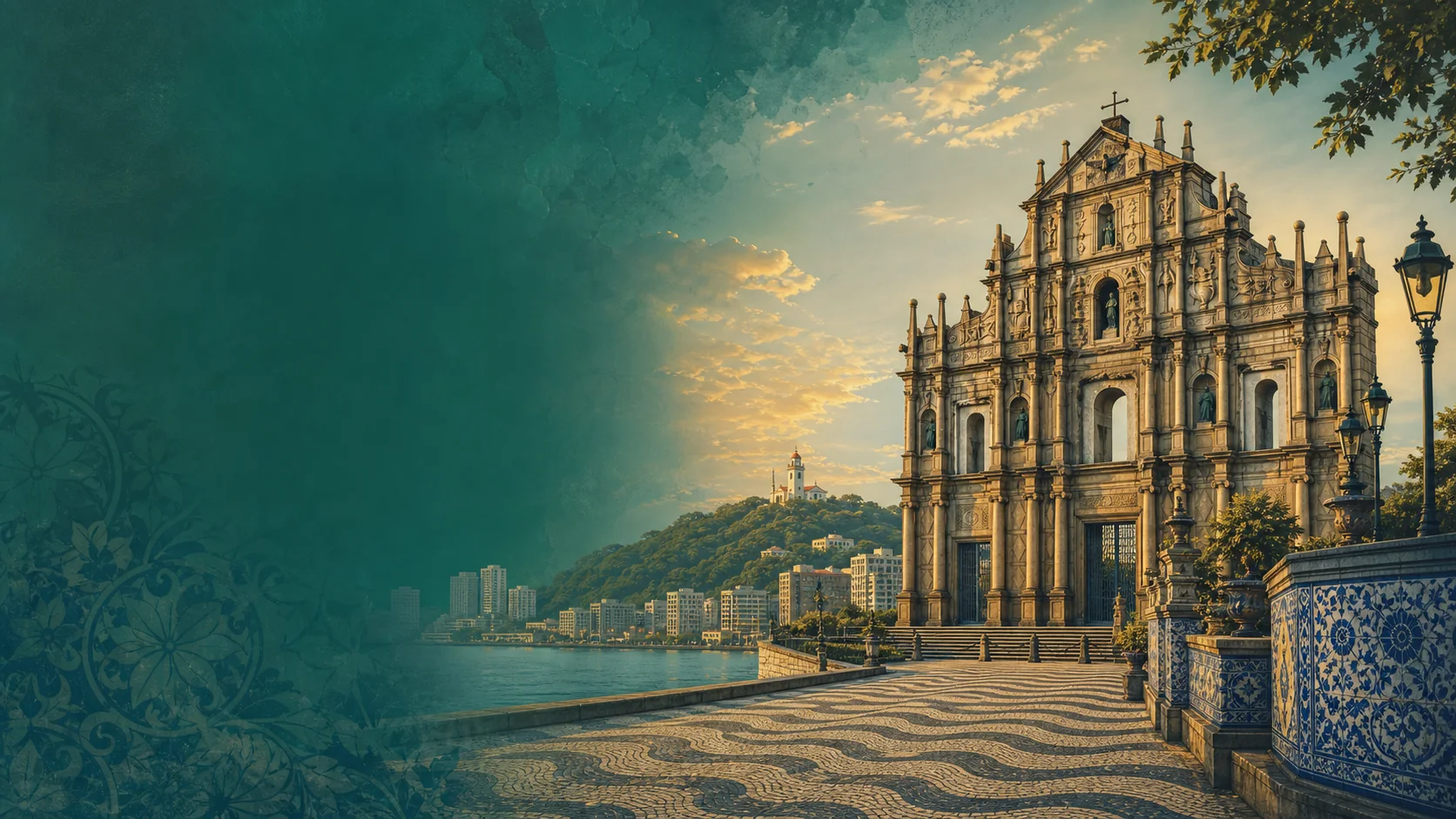
The Macao Government Tourism Office's central World Heritage route links Senado Square with churches, civic buildings, lanes and the Ruins of St Paul's. Follow the official sequence loosely, but pause in public squares and interiors instead of chasing every listed point. UNESCO's inscription recognises the Historic Centre as a group of sites reflecting long contact between Chinese and Portuguese cultures.
The Ruins of St Paul's can become crowded, so arrive early and continue beyond the façade to understand the wider setting. Keep voices low inside active religious buildings, obey photography signs and avoid blocking worship or doorways. Stone steps and summer humidity make a slow pace more sensible than doubling back.
- Download the official heritage route.
- Wear shoes with grip for stone steps.
- Treat churches and temples as active sacred places.
Day one afternoon: A-Ma Temple and maritime context
Continue south toward A-Ma Temple and the Maritime Museum to connect Macao's sacred and seafaring history.
A-Ma Temple forms part of the UNESCO property and remains a place of worship. Observe incense, offerings and prayer from the visitor route without inserting yourself into rituals. The nearby Maritime Museum's official tourism page explains its focus and location; check current arrangements before making it a fixed stop.
This southern cluster gives a useful counterweight to the better-known St Paul's area. Mandarin's House can fit between the central route and A-Ma area when access and energy allow, but it should be optional. Finish before fatigue makes the return over slopes unpleasant.
- Do not touch offerings or ritual objects.
- Check museum access on the official page.
- Use a bus for the return if the walk becomes tiring.
Day two morning: Taipa's lanes and houses
Start the second day in Taipa around the Taipa Houses and Rua do Cunha, then explore adjacent lanes on foot.
The tourism office's Taipa route presents a neighbourhood shaped by residential, religious and Portuguese-influenced architecture. The Taipa Houses provide an institutional anchor, while Rua do Cunha is a busy food and shopping street. Visit without treating the surrounding community as a theme park.
Taste selectively and ask vendors about ingredients when dietary restrictions matter. Keep queues close to shopfronts and avoid obstructing residents. If the area is crowded, step into quieter parallel streets only where they are public and clearly accessible.
- Ask before photographing shop staff.
- Carry cash or payment methods confirmed locally.
- Keep private doorways and residential lanes clear.
Day two afternoon: Coloane at a slower pace
Use the afternoon for Coloane Village, choosing a short waterfront and heritage walk rather than attempting every southern attraction.
The tourism office publishes a dedicated Coloane walking route. It highlights a quieter settlement pattern distinct from the peninsula and Taipa. Use the official map, remain on public streets and respect temples, churches and homes along the route.
Bus links connect the peninsula, Taipa and Coloane, but check current route information through official transport channels. If weather deteriorates, return early instead of waiting at an exposed stop. Coloane works best as a deliberate contrast, not a last-minute race before departure.
- Save the return stop location offline.
- Check the weather before a waterfront walk.
- Do not enter private courtyards for photographs.
Connect the itinerary with buses and LRT
Use buses for broad territory coverage and the LRT where its current lines suit the trip, always checking official route and fare information.
The Macao tourism office explains that public buses link the peninsula, Taipa and Coloane and directs travellers to official route information. It also links to the Macao LRT operator for current lines, timetables and fares. Because networks evolve, an old hotel map should not be the final authority.
Prepare the accepted payment method before boarding and follow local queue behaviour. Station and stop names may appear in Chinese and Portuguese, so save the destination visually. Build a buffer for interchanges and the final walk, especially when carrying luggage.
- Check the official route on the travel day.
- Save destination names in Chinese and Portuguese.
- Avoid a tight ferry or flight connection after sightseeing.